back to top
31.1 C
Riyadh
Sunday, May 10, 2026

Software Engineering Students Showcase AI-enabled VR Training Systems at the World Defense Show (WDS 2026)

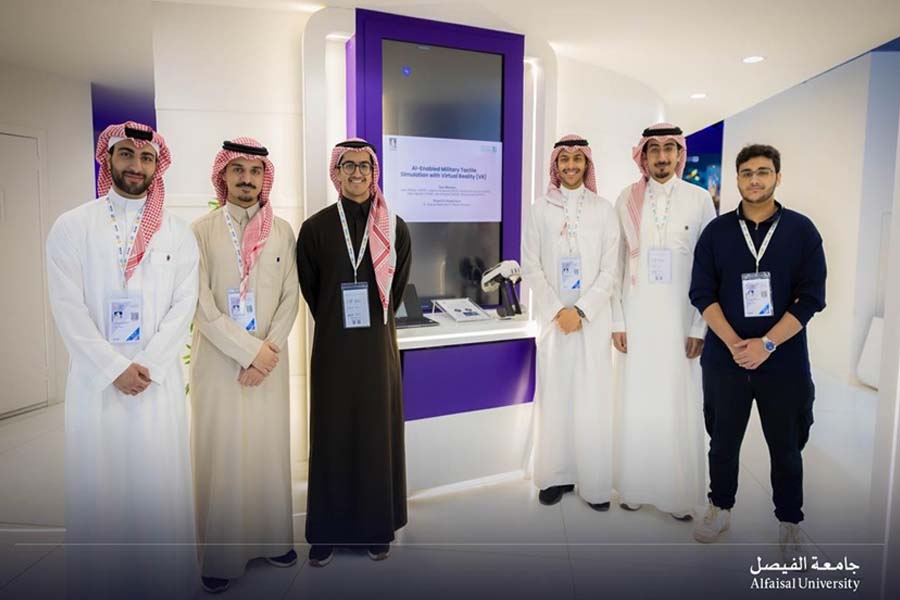
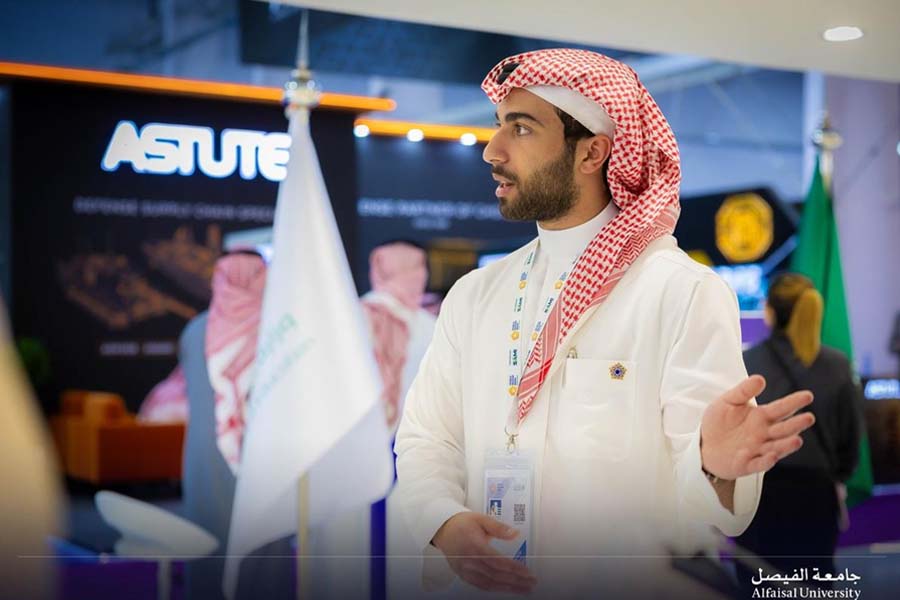
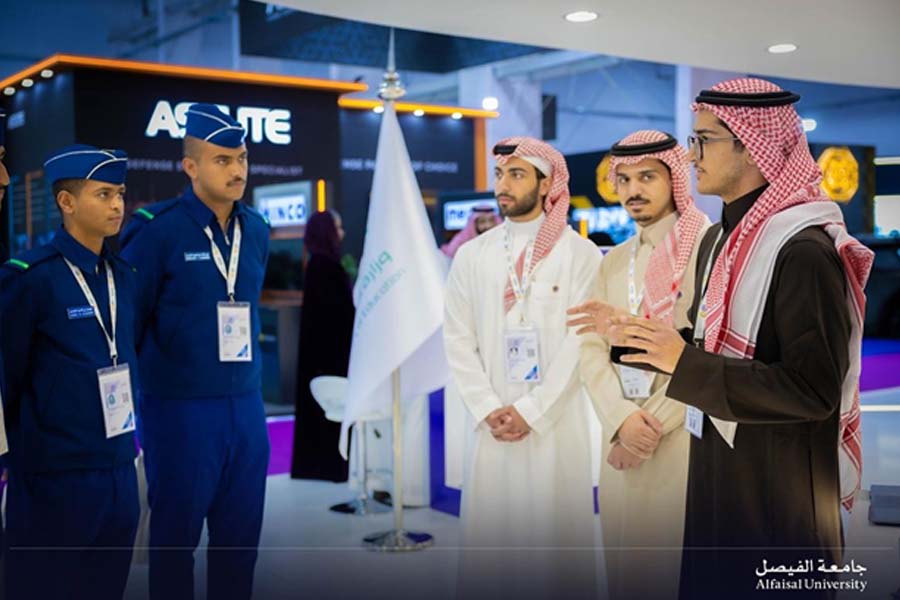
A team of Software Engineering students presented a virtual reality (VR) training system at the World Defense Show (WDS 2026) in Riyadh on February 12th, demonstrating a pipeline that begins with AI-enabled scenario generation and culminates in immersive VR training experiences across air, land, and sea contexts. The World Defense Show (WDS) convenes stakeholders around technology development and integration across multiple defense domains.

In the WDS setting, the student team drew on their year-long work to demonstrate how software engineering methods translate into practitioner-facing prototypes, and how iterative feedback can shape a system well before deployment. The project was developed in Alfaisal University’s AI Research Center, in coordination with the Prince Sultan Defense Studies and Research Center (PSDSARC). The project team comprises six Software Engineering students in the College of Engineering and Advanced Computing: Saleh Alkhattaf, Suliman Alhammad, Fayez Algusaibi, Naif Almubarak, Abdullah Bin Salamah, and Mohanad Attiah. The project is co-supervised by the AI Center’s Director, Dr. Areej Al Wabil, and the AI Center’s Deputy Director, Dr. Randa Almomen. In this project, students explore emerging fields with structured faculty mentorship. Throughout the capstone project, faculty supervision provided ongoing guidance as the team explored the domain of AI-enabled scenario generation and immersive training, supporting students in refining problem definitions, validating assumptions with stakeholders, and making evidence based design and engineering decisions as requirements evolved. This mentorship extended beyond technical development to include system tradeoffs, responsible use of AI models, and effective communication of design intent to expert audiences.

At the core of the project is a two-stage workflow designed for military training design and delivery. First, the system produces a structured scenario that specifies training objectives, environmental conditions, and key elements in the context of training. Second, that scenario is instantiated inside a VR module where trainees can rehearse procedures and decision-making in a controlled, repeatable environment. By separating scenario definition from simulation delivery, the team aimed to make training content easier to update, test, and expand as requirements evolve. The AI-enabled scenario generation component was developed to support breadth and variation without sacrificing instructional intent. Rather than treating scenarios as static scripts, the team explored ways to generate scenario variants aligned to domain needs with large language models (LLMs), for example, mission constraints in operations, mobility and terrain considerations for land contexts, and navigation and situational complexity for sea or aviation settings. This approach enabled rapid iteration during the capstone year, with each new scenario acting as a case for the VR training flow and the user experience design.

Presenting the work at an international industry venue helped the students reflect on their design assumptions with domain experts and in real-world workflows. Conversations with practitioners and subject-matter experts informed refinements to scenario structure, clarity of prompts and objectives, and the kinds of performance metrics that are useful during debrief. The team also used feedback to prioritize practical considerations that are easy to overlook in lab-based prototypes, such as usability, repeatability, and how to balance realism with training safety and cognitive load.

“This kind of real world engagement is central to the educational value of capstone experiences. Capstone projects are the culmination of the four-year degree in software engineering for students in the AI track, bringing together skills developed across the curriculum, including requirements engineering, software architecture, AI and data-driven methods, user-centered design, testing, and project management,“ Dr. Areej Al-Wabil noted. “A year-long capstone format, in particular, creates room for discovery and correction: students can define a problem with stakeholders, build an initial prototype, validate it with practitioners and domain experts, and then revisit earlier decisions with evidence in hand.”

The World Defense Show showcase also highlighted how Alfaisal University’s advanced computing programs and Applied AI research opportunities in the research center can create structured opportunities for students to build with, and not just for, real communities of practice. When students receive feedback throughout development, they learn to communicate tradeoffs, justify design decisions, and iterate responsibly in response to constraints that are typical in professional settings. “The phases of build, test, learn, and refine, is difficult to simulate through relatively short project-related tasks, however, it becomes natural in a sustained capstone and research project that has authentic external touchpoints,” highlighted Dr. Randa Almomen. In that spirit, the students framed their presentations in the exhibit not only as a technical demonstration, but also as evidence of what capstone learning can produce when software engineering is practiced as an end-to-end discipline, grounded in real needs, informed by expert feedback, and evaluated through iterative prototyping.

Looking ahead, Alfaisal University’s AI Center continues to advance as a Center of Excellence in AI research, teaching, and applied practice, providing an enabling environment where student researchers and developers can translate advanced methods of computing into validated, real-world prototypes through mentorship, facilities, and industry-aligned project pathways. Through initiatives that emphasize responsible innovation, iterative evaluation, and practitioner engagement, the AI Center in alignment with partner institutions, helps students strengthen technical depth while delivering solutions that are grounded in operational needs. This project was made possible through the generous support of PSDSARC, whose funding enabled the team to pursue a full year development cycle and showcase the outcomes to domain experts. For more information about ongoing programs and opportunities, visit the AI Center’s website at ai.alfaisal.edu.

Latest news

ALL ARCHIVES

Related news

Students

Archives

News Release

Breast cancer workshop (AlEqtesdaya, Al Jazirah, Al Riyadh :12 April 2010) COM International Achievement (AlHayat, Al Riyadh, Al Watan, Al Nadwah: 11 April 2011) Dallah...

The announcement of the academic program

RIYADH, May 16, 2007 — His Royal Highness Prince Khalid Al Faisal Ibn Abdul Aziz Al Saud, Chairman of the Board of Trustees of...

Memorandum of Understanding between Alfaisal University and the Security Forces Hospital

H.H. Prince Bandar Bin Saud Bin Khalid Al Saud, Chairman of the Executive Committee of the Board of Trustees of Alfaisal University, has signed...

Alfaisal University participates as an official sponsor in the Exhibition of Education and Training

Alfaisal University participated as an official sponsor in the Exhibition of Education and Training, organized by Madarat Alaridh Company from 20 to 23 May...

Swedish Scholarship Program for Saudi Graduates

Sweden is to establish a scholarship program for Saudi graduates and cooperate with the Kingdom in building a new engineering department in Riyadh as...